

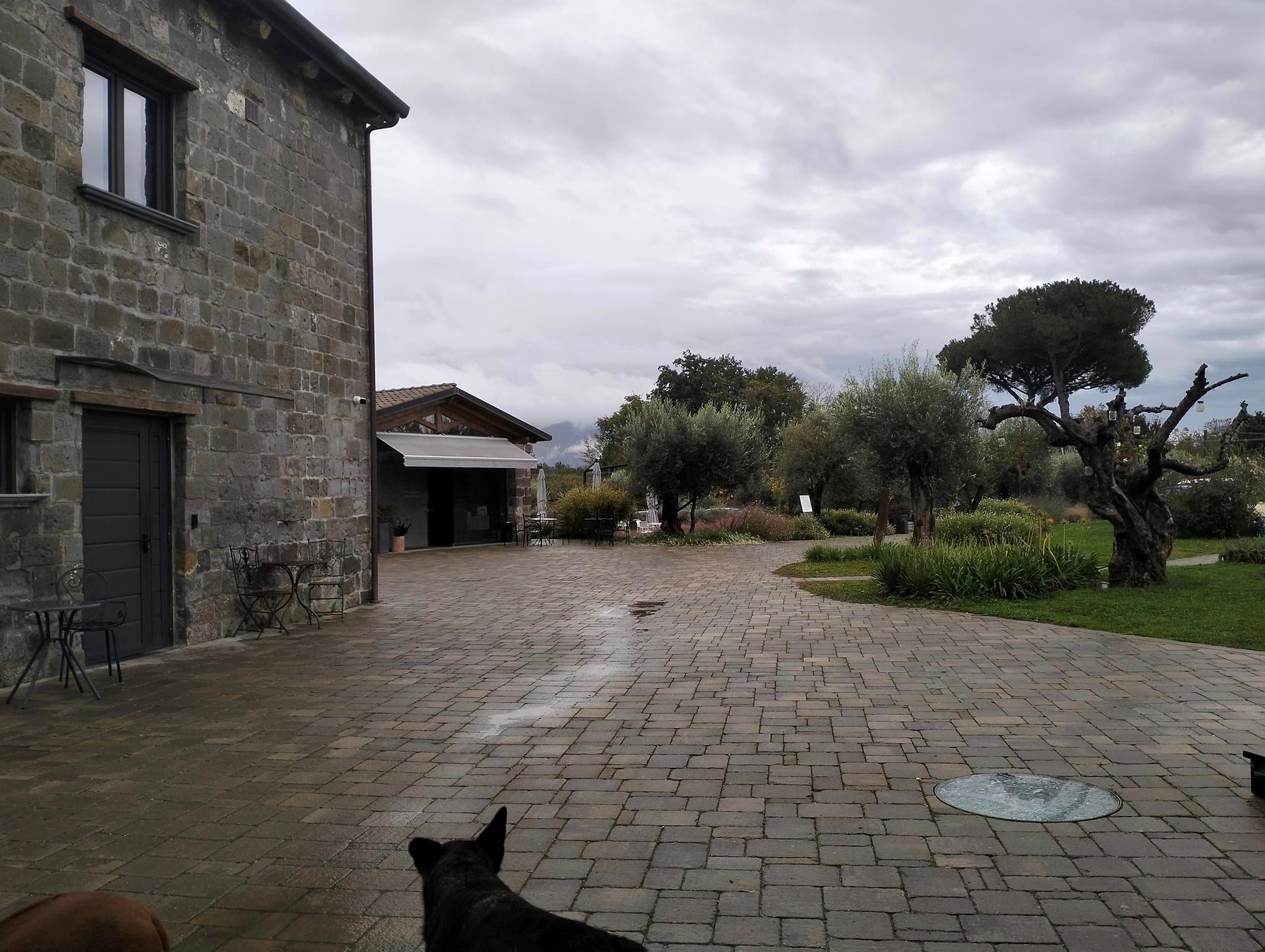
This Saturday I had the pleasure of doing a wine tasting at the organic and biodynamic farm “I Cacciagalli” located in Teano, province of Caserta.
This company's primary objective is to safeguard the ecosystem and biodiversity. In fact, they decided to keep 5 hectares of their property as a wooded area precisely to protect it. Even the swimming pool on their estate is organic, i.e. it is cleaned using phytopurification. The pool therefore hosts plants capable of carrying out very fine microfiltration of the water.
The only part of the estate that cannot be visited is the cellar where they produce Aorivola, a Falanghina which is produced a few kilometers from the main cellar in Aorivola, a hamlet in the municipality of Caianello.
This company's primary objective is to safeguard the ecosystem and biodiversity. In fact, they decided to keep 5 hectares of their property as a wooded area precisely to protect it. Even the swimming pool on their estate is organic, i.e. it is cleaned using phytopurification. The pool therefore hosts plants capable of carrying out very fine microfiltration of the water.
The only part of the estate that cannot be visited is the cellar where they produce Aorivola, a Falanghina which is produced a few kilometers from the main cellar in Aorivola, a hamlet in the municipality of Caianello.
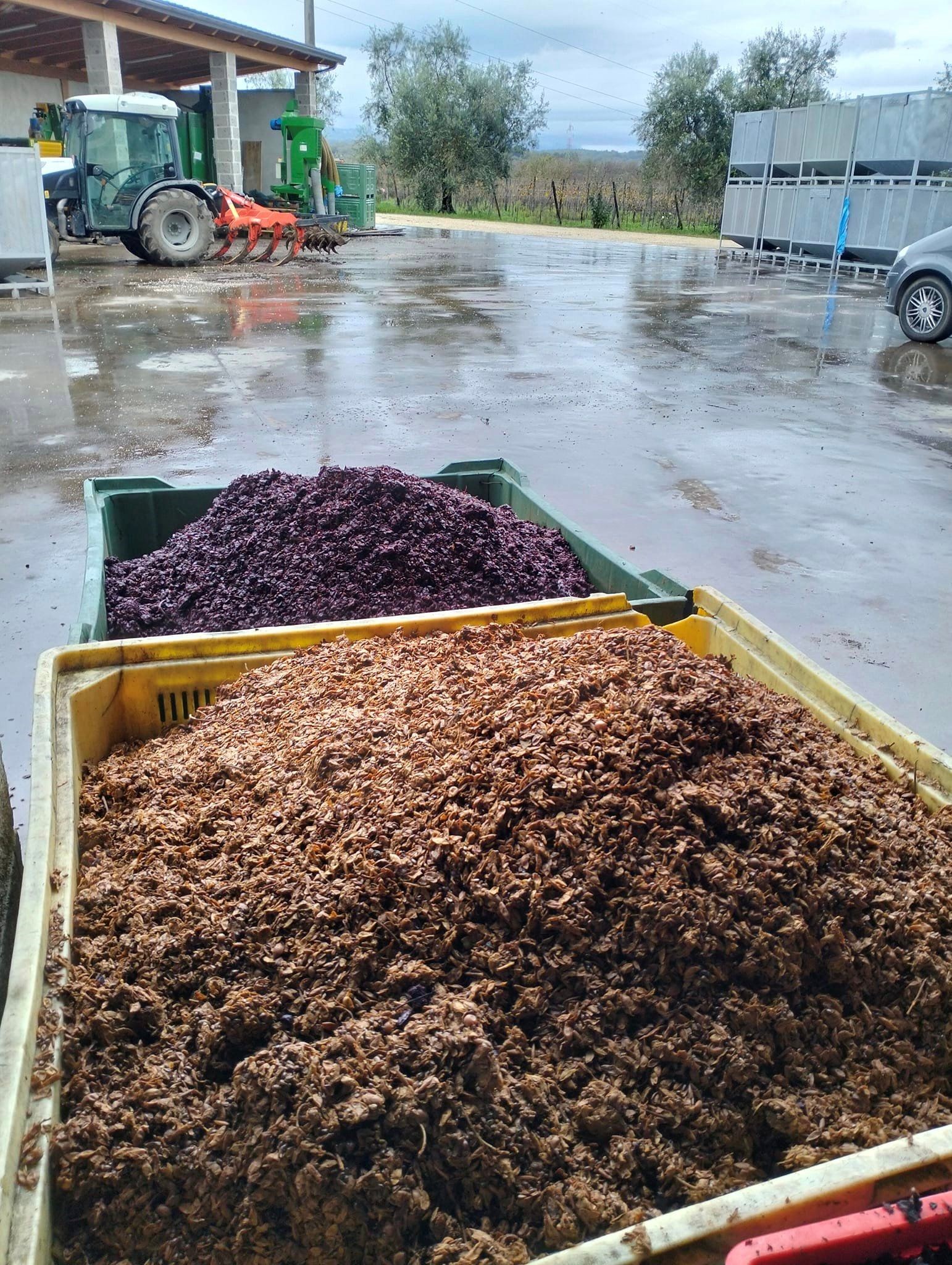
Furthermore, they are working on two projects for the recovery of "ancient" vineyards, one of which concerns an Asprino vineyard near Aversa, from which a sparkling wine with an ancestral method called Basco is born.
Their wine distributor is the Velier company.
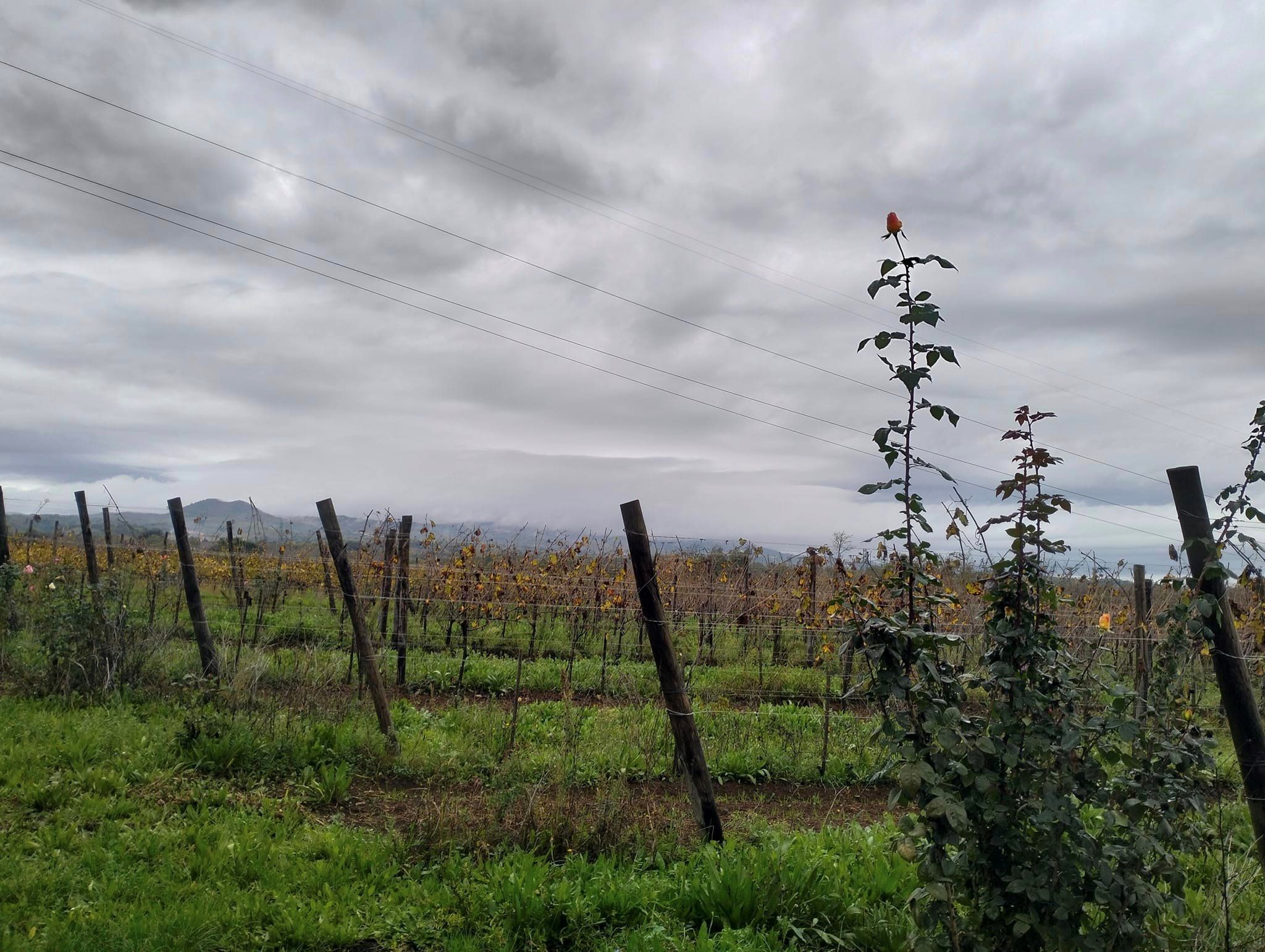
The vineyards are all single-sided Guyot and
for the production of wine it is not obtained by pressing everything with the destemmer because you try to press less to maintain its elegance.
The base wines of the cellar are fermented and aged in resin cement.
Others are fermented and refined in reinforced concrete and normal concrete, there are new fermenters whose particular crystalline shape means that there is no need for reinforcement. The amphorae, however, are kept in an underground cellar with tuff walls against the ground which maintains constant humidity and temperature.
In fact, the amphora has the micro oxygenation of wood, but does not release gallic tannin unlike wood. Of the tertiary aromas, amphorae provide only those due to the microoxygenation of the wine. The wines obtained in amphorae are oxidative.
Amphorae last a lifetime, but it is easy to have a micro-break. The cost of a 1600 liter amphora costs approximately 7000 euros. The company has large amphorae produced in Trentino and small amphorae produced in Tuscany. Porosity changes and those produced in Trentino, being less porous, exchange less oxygen. They also have some amphorae from 2005 in clayver ceramic.
The amphora has the characteristic that during fermentation it already maintains the temperature and natural yeasts are already present inside which help in the process.
However, the drawback of the amphorae is entirely manual and requires more time.
The only flaw during the tasting was that no differences were made in the type of glasses between reds and whites and the glass was not an ISO glass.
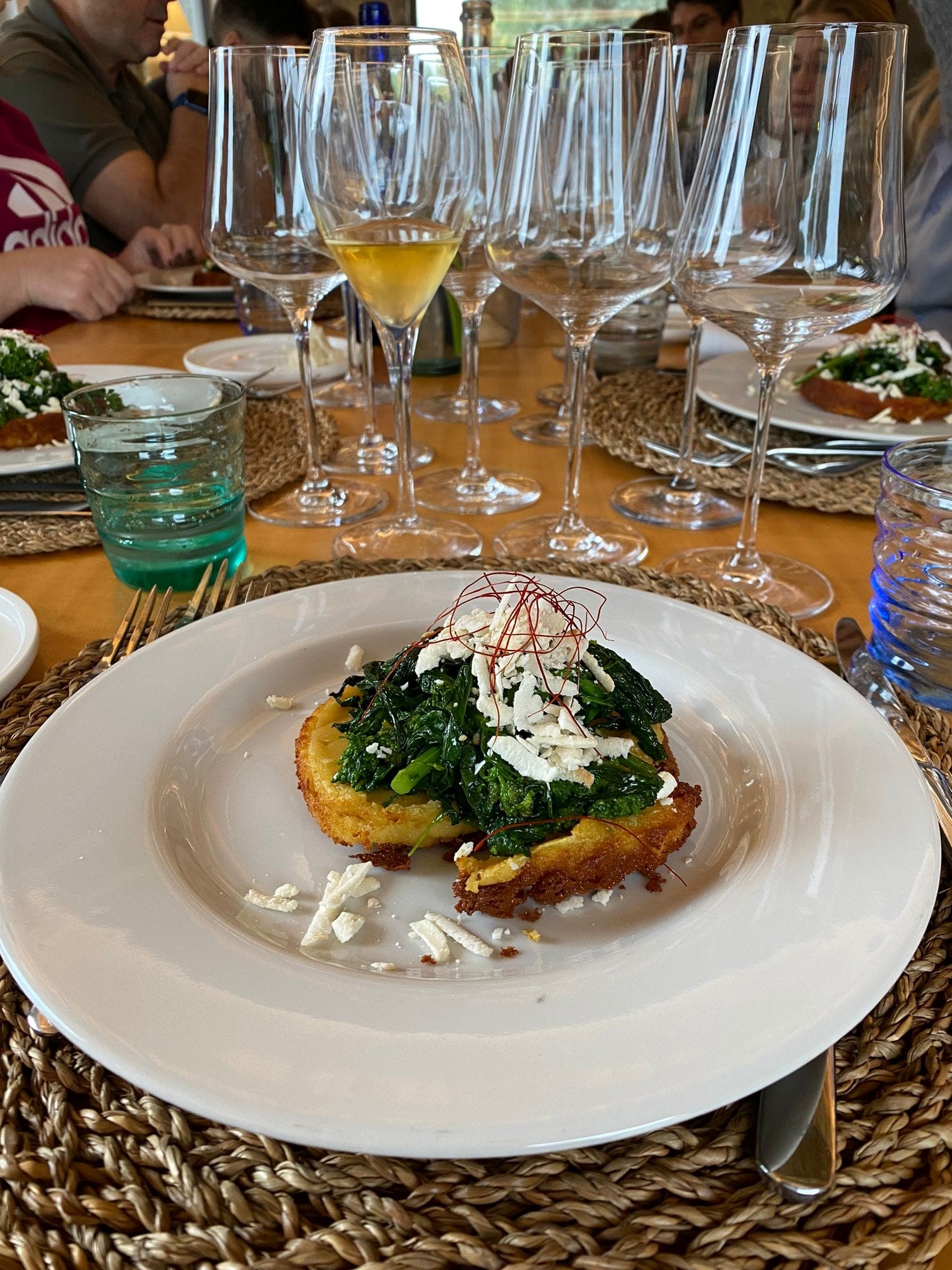
The restaurant is excellent. Experience to be redone.